

Measure.Chart.Follow. — Dr. Siamak Shiva
Pediatrician, Pediatric Endocrinology and Metabolism Tabriz
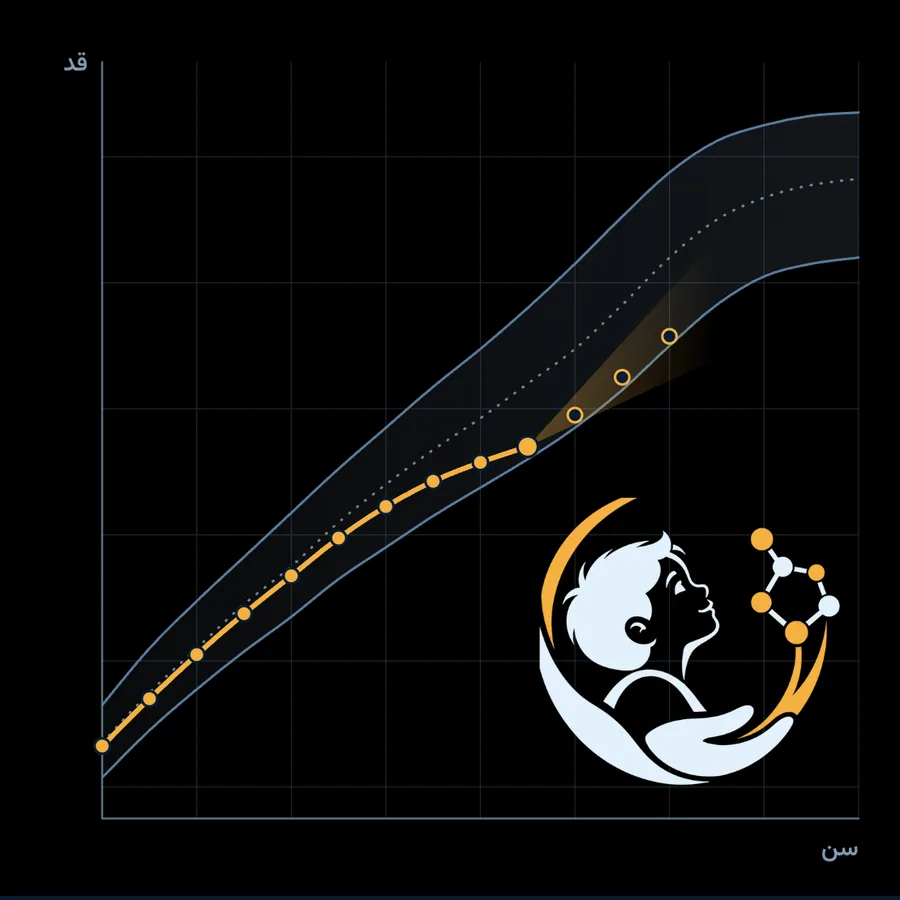
The path of several measurements says more about a child's growth than one number. This chart is only a sample.
We look at a child's growth over time.
Dr. Siamak Shiva is a pediatrician and pediatric endocrinologist in Tabriz. Most families come with one worry: their child is shorter than others of the same age, signs of puberty have come early, a thyroid result is a little high, or diabetes has been diagnosed. This site helps you see what is worrying, what is not, and when to act sooner.
More about the doctorWhat is worrying you?
Tap what you are facing to reach the right explanation. This list is not a diagnosis; it only takes you to the right page.
- Shorter than children the same age
- Not growing as before
- Signs of puberty too early
- My teenager has not started puberty
- Thirst and a lot of urine
- Newly diagnosed diabetes
- Newborn thyroid screening
- TSH is slightly high
- Overweight in a child
- What is bone age?
- Questions about growth hormone
A child with thirst, a lot of urine and weight loss who is vomiting, breathing fast and deep, or drowsy may have diabetic ketoacidosis. This does not wait for an appointment: go to the emergency department the same day or call 115. When should we act urgently?
From height and puberty to diabetes and thyroid, in plain words.
These pages explain what each problem is, when it needs checking and how treatment generally goes. Your child's diagnosis and plan are set by the doctor after an examination.
Short stature and growth problems
Many short children are healthy: they take after their parents or simply grow later. What matters is the path on the growth chart: when checks are needed, what bone age shows, and who growth hormone helps.
Read moreEarly and late puberty
Signs of puberty before age 8 in girls or 9 in boys, or no signs in the teenage years. What is normal and what needs checking.
Read moreType 1 diabetes in children
Thirst, passing a lot of urine and weight loss are the main signs. What diabetes is, why insulin is needed and how a family lives with it.
Read moreThyroid conditions in children
From newborn screening and congenital hypothyroidism to underactive and overactive thyroid in childhood, and the result that is only slightly high.
Read moreChildhood obesity and metabolism
Weight in children, without blame or strict diets. When sugar, fats and the liver should be checked, and where a family can start.
Read more
From the first visit to regular follow-up
Hormone conditions in children rarely end with one visit, and many of the children who come only need watching over time. At each step you know why something is being done and what comes next.
- Step 1 of 5.
Talking and history
You are asked about pregnancy and birth, feeding, illnesses and medicines, and both parents' heights. Bring the vaccination card, earlier heights and weights, and any test results.
- Step 2 of 5.
Measuring and the growth chart
Height and weight are measured carefully and plotted on the chart, and your child is examined. The path of growth matters more than any single number.
- Step 3 of 5.
Tests, if they are needed
A blood test or a bone age X-ray is asked for only where it helps the decision. For many children, measuring again after a few months settles the question.
- Step 4 of 5.
A care plan with the family
The results are explained in plain words: whether treatment is needed, what the options are, and what each one can and cannot do. Older children take part in this talk too.
- Step 5 of 5.
Regular follow-up
Growth and treatment are checked over time, and the plan changes as your child grows. Urgent signs do not wait for the next visit.
With you through every step of diagnosis, treatment and follow-up.
From blood sampling at home and reminders for periodic tests to imaging, pharmacy and referrals. One support number arranges all of it.
Medical diagnostic laboratory
Quick appointments and quick results.
- Blood and sample collection at home or at work (free)
- Reminders for periodic tests and check-ups
- Quality control and follow-up of test results by the support team
- Finding the fastest turnaround, with follow-up by the patient support unit
- Free
Transfer in the support vehicle
Every transfer on this list is free on the form.
Medical imaging and ultrasound
Specialist ultrasound, CT scan, MRI and PET scan.
Pharmacy and specialty medicines
You write the name of the pharmacy on the form.
Referral to specialists and sub-specialists
You write the name of the doctor or the specialty you want on the form.
Rehabilitation and wellbeing
Quick appointments and referral to rehabilitation and wellbeing specialists, arranged by the support team.
Treatment and rehabilitation at home
Specialist treatment and rehabilitation services at home.
Wherever “free” appears here, the support form also marks it free. This list comes from a draft of the form and may change once it is final.
Simple answers to the first questions.
My child is shorter than others the same age. Should I worry?
Not always. Most short children are healthy: they take after short parents or grow later than others. What needs checking is growth that slows down or falls away from its path on the chart. That is why a child's earlier heights and weights are so valuable.
How tall will my child be?
Nobody can give an exact number. The parents' heights, the path on the growth chart and bone age only give an approximate range, and that range gets better with time.
Do height supplements and drops work?
For a child who eats enough, there is no evidence that supplements add height. If there is a clear shortage, such as vitamin D or iron, the doctor treats it. Ask a doctor before giving any herbal or “hormonal” product.
Is growth hormone for every short child?
No. Growth hormone is used for a shortage of this hormone and for some specific conditions. The decision follows proper checks, and treatment means injections and regular follow-up for a long time. It is not a shortcut to being taller.
At what age is puberty early?
Signs of puberty before age 8 in girls and before age 9 in boys need checking. Underarm hair or body odour alone is sometimes harmless, but that is decided by an examination.
Do chicken and “hormone foods” bring puberty on early?
There is no clear evidence that eating chicken causes early puberty, and cutting it out is not a treatment. What is linked with earlier puberty, especially in girls, is excess weight. Rather than removing one food, balance what the whole family eats.
Can type 1 diabetes be cured with diet or herbal medicine?
No. In type 1 diabetes the body does not make enough insulin, and a child needs insulin to stay alive. Stopping insulin, even for a short time, is dangerous. Food is part of the care, not a replacement for insulin.
Is my child's diabetes our fault?
No. Type 1 diabetes does not come from eating sweets or from anything parents did wrong. The immune system damages the cells that make insulin, and there is no sure way to prevent it.
TSH is slightly high. Does my child need medicine?
Not always. In many children a slightly high TSH with a normal T4 becomes normal on a repeat test. Newborns are different, and their screening results need prompt follow-up.
Can we reduce thyroid medicine or insulin ourselves?
No. Do not stop or reduce any medicine without the doctor. If your child is not tolerating a medicine, or you are worried, talk to the doctor.
When should we go straight to the emergency department?
Thirst and a lot of urine with vomiting, fast deep breathing or drowsiness; repeated vomiting or high ketones in a child with diabetes; low blood sugar with unconsciousness or a seizure; and any child who is limp or confused. Call 115. The full list is in the guide.
Up to what age does the doctor see children?
This will be announced after the doctor confirms it.
Do you work with insurance?
The list of insurers will be announced soon.
These answers are general and do not replace a doctor's opinion about your child.
The first step is a calm measurement.
Talk to the support team to arrange a visit. If you have your child's earlier heights and weights, find them and bring them along.
Support number